IBM Whitepaper Redesign
Modernizing static PDFs into scalable, interactive content modules
TL;DR
Role: Lead Product Designer
Team: Me + 2 devs + 1 PM
Timeline: ~3 months
Deliverables: UX audit, interaction models, CMS components, design system integration
Wins: 5 reusable templates, improved reader flow, scalable design system integration
Impact: Set the foundation for IBM’s centralized whitepaper content hub
Challenge
IBM’s Business Units generated thousands of dense PDF whitepapers annually. These were difficult to search, navigate, or repurpose. Readers struggled to scan content, and CMS editors lacked flexibility to present it in modern, digestible formats.
Role
Lead Product Designer — I owned UX research, concept development, interaction models, prototyping, and stakeholder collaboration. I also guided integration with IBM’s design system and CMS tooling.
Approach
We split the project into two key tracks:
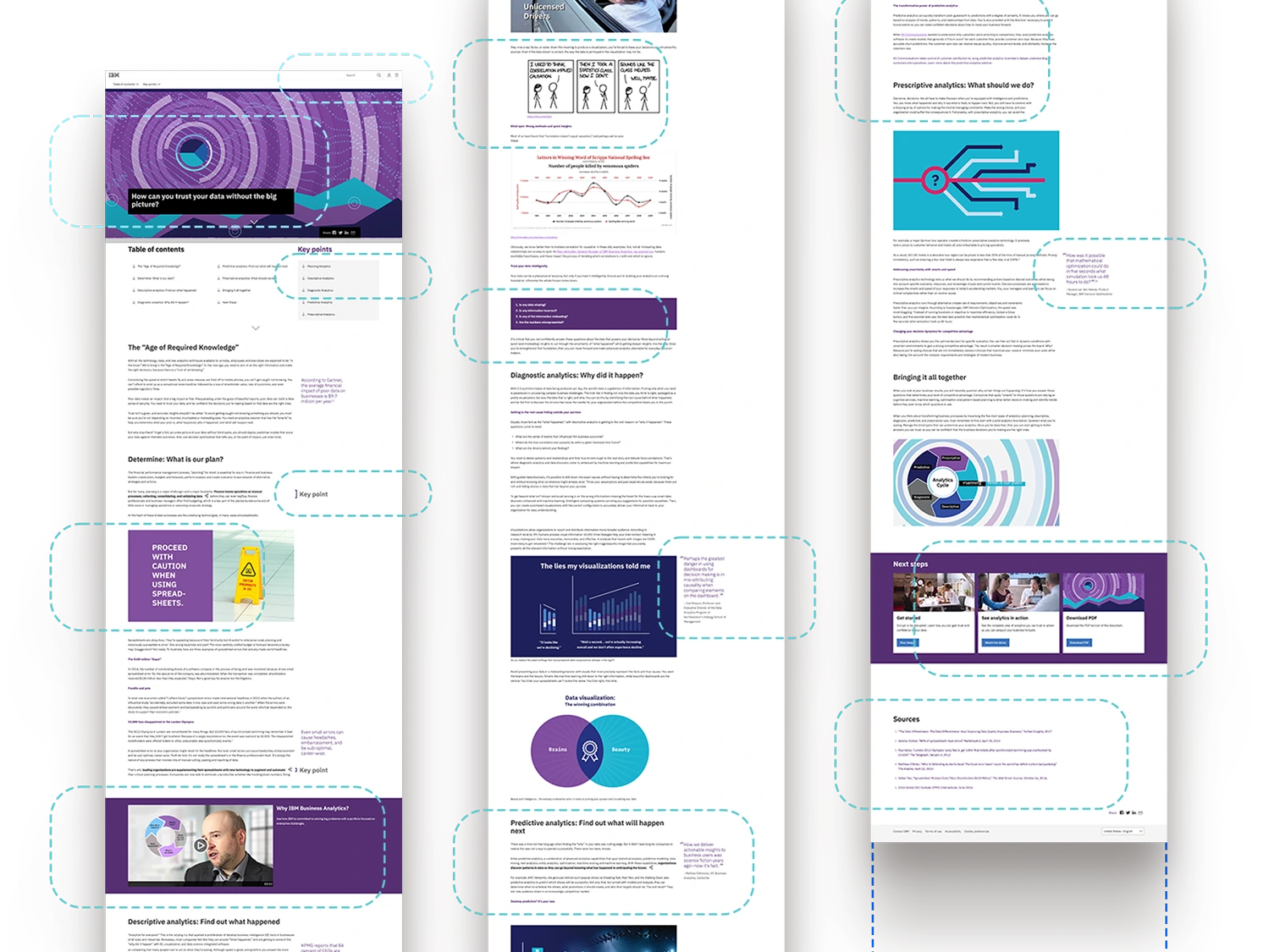
- Content Audit & CatalogingI led a structured review of IBM’s whitepaper content across industries, identifying reusable patterns and content needs. This informed a flexible system architecture.
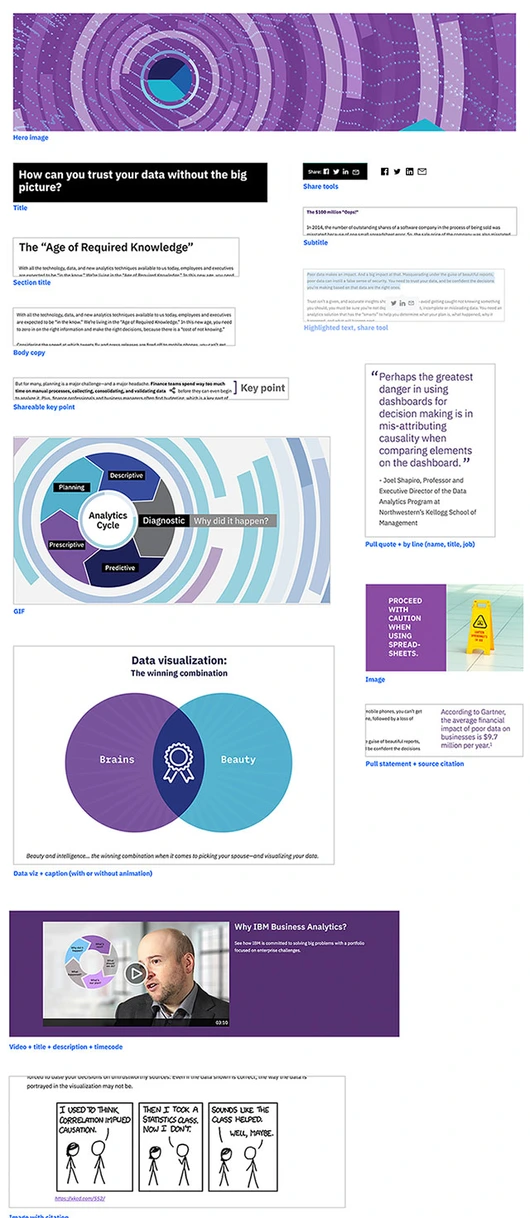
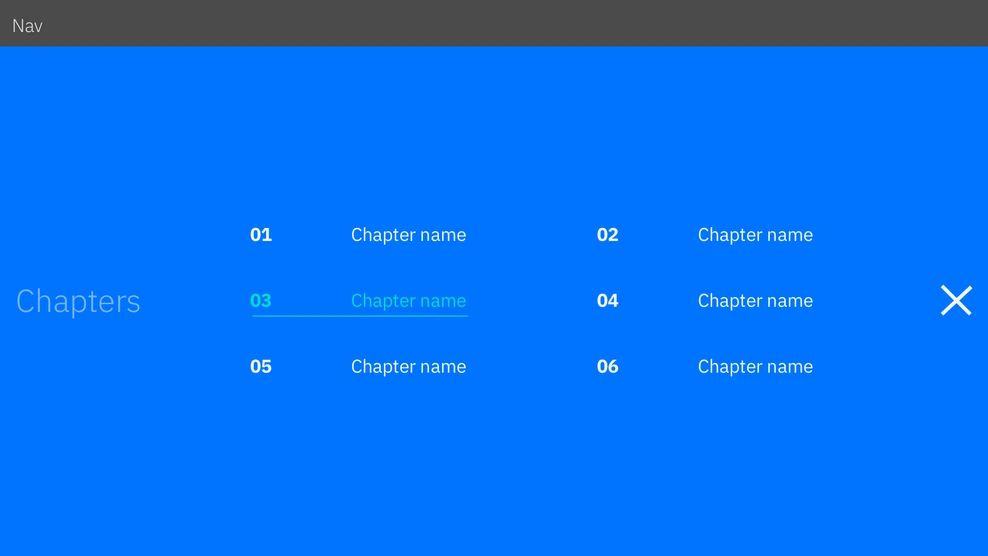
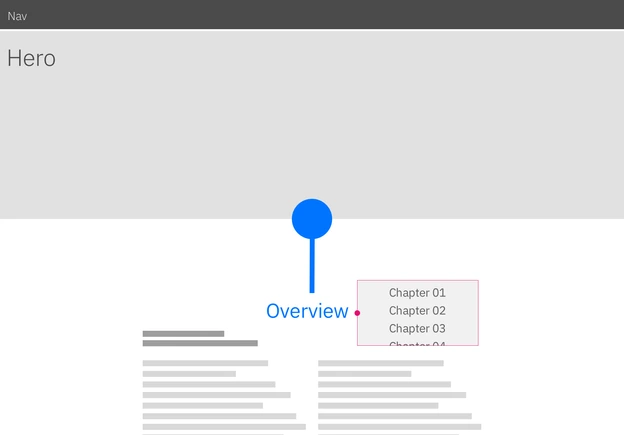
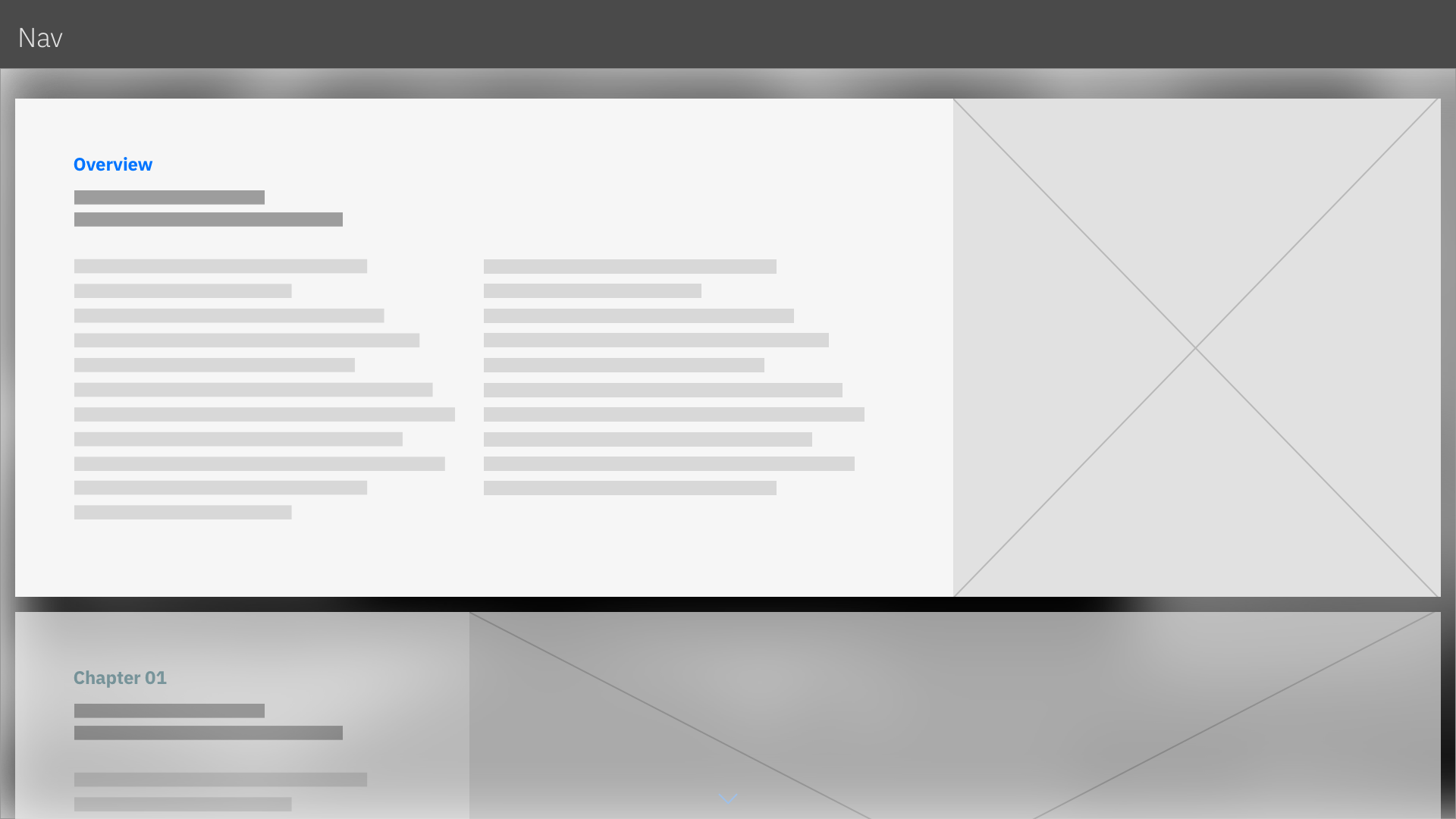
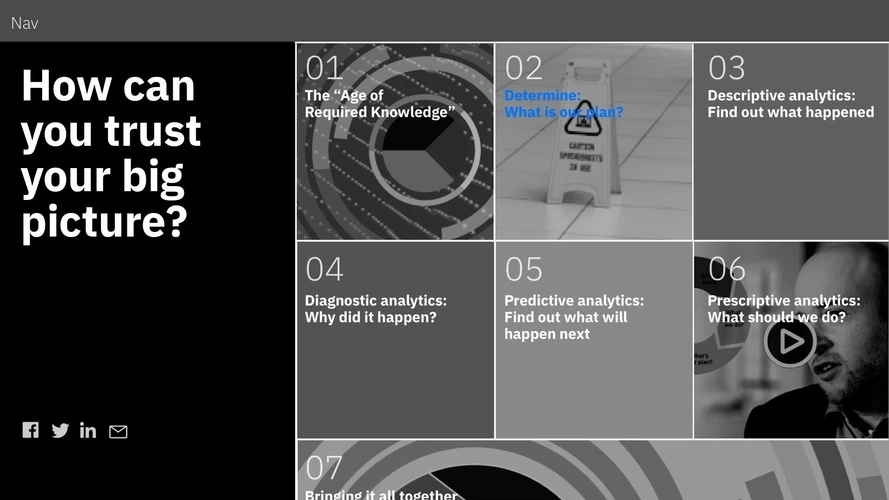
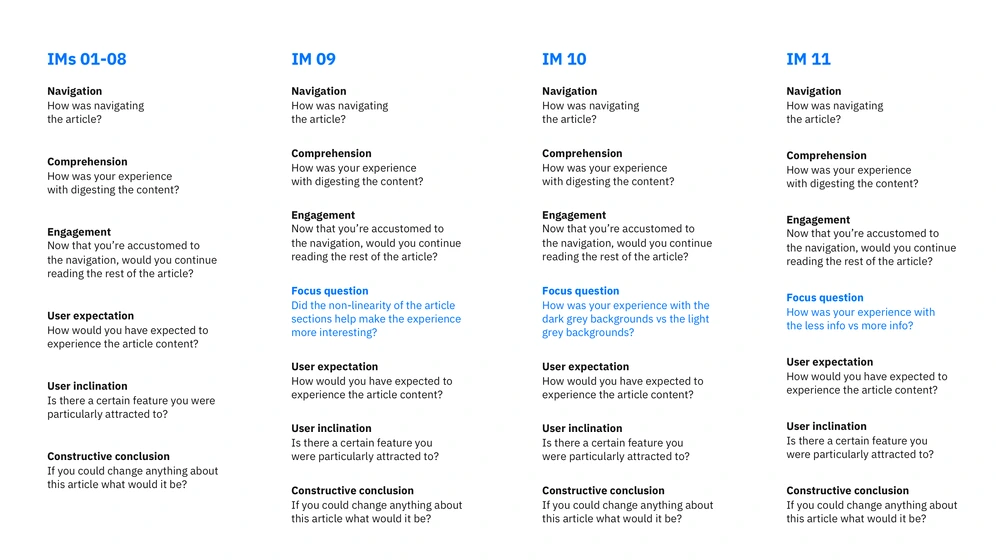
- Interaction Design & TestingI created 12 unique models to explore how long-form content could behave in a digital experience—from traditional layouts to interactive storytelling. Components were classified by complexity, media type, and level of user interaction.
Solution
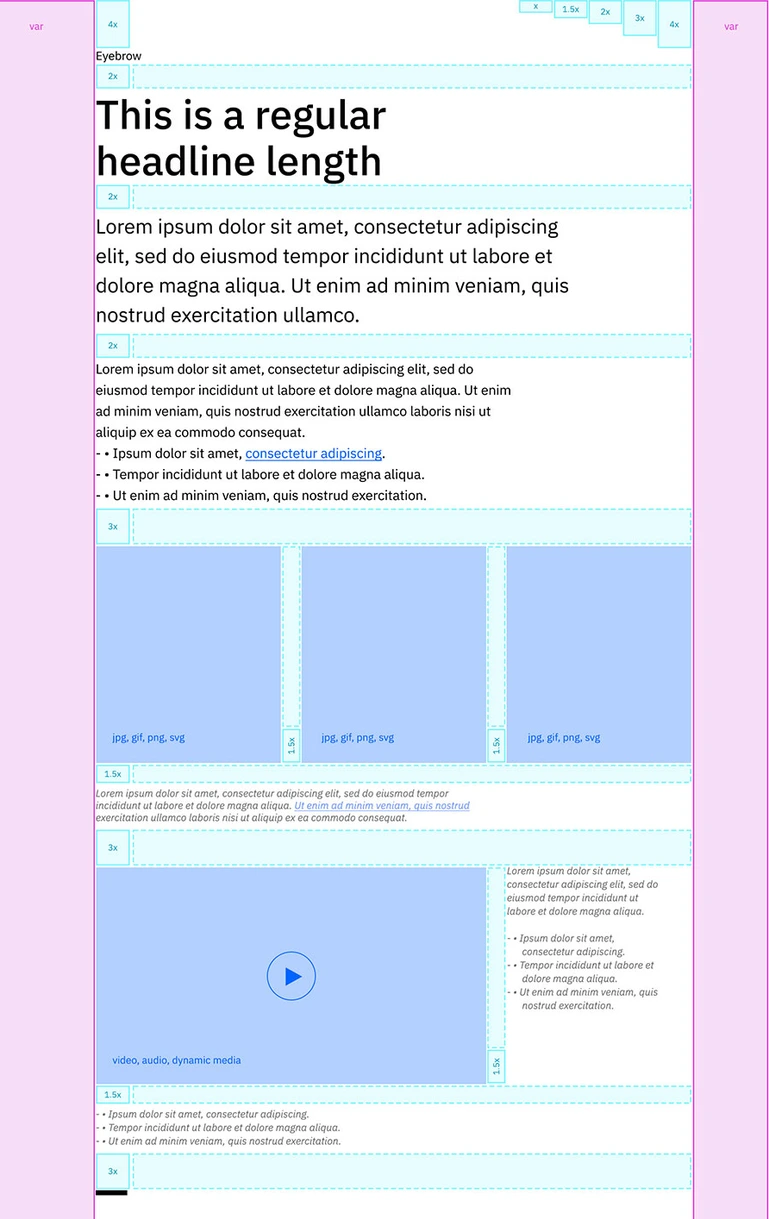
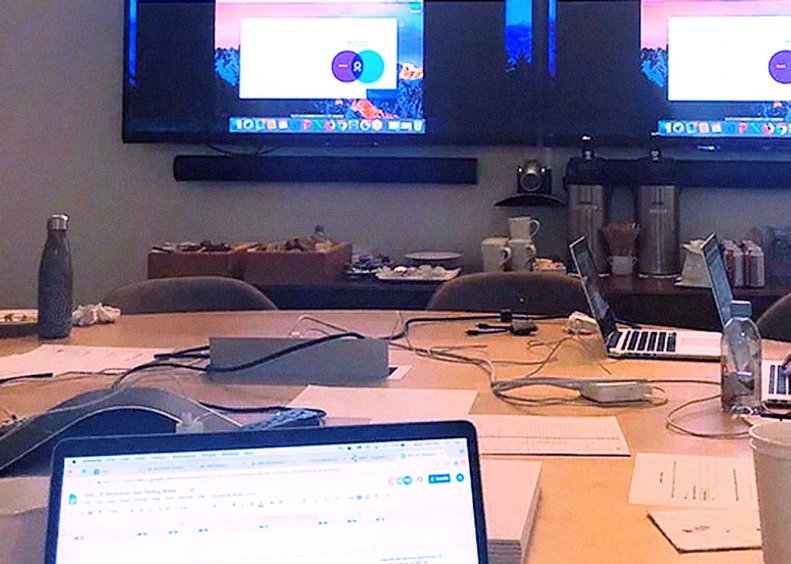
After iterative testing and stakeholder workshops, I narrowed down the models to five high-performing templates that met 80% of IBM’s whitepaper use cases. Key outcomes:
- A master component library for CMS editors
- Deep integration with IBM’s design tokens and systems
- Print-friendly and scan-friendly layouts
- Reading time indicators and improved visual hierarchy
- Scalable interaction patterns for future animations or embeds
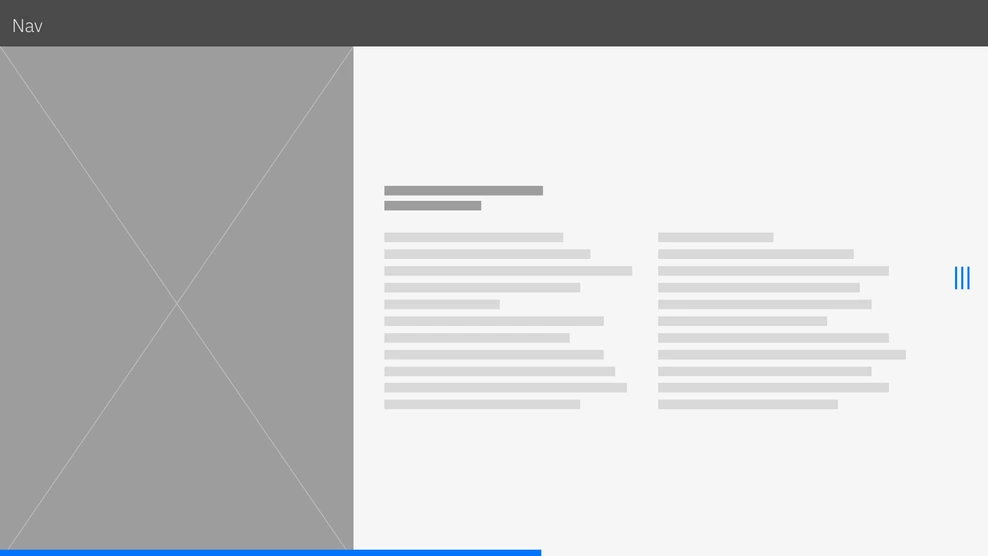
All designs were integrated into IBM’s design system and prototyped using low-to-mid fidelity flows to validate usability and engagement.

Impact
I transformed how IBM structures and delivers its thought leadership content. My work resulted in a modular system that improved discoverability, readability, and editor control—setting the foundation for a future centralized content hub.
Results
- Streamlined whitepaper reading and navigation
- Gave editors greater control without compromising design integrity
- Prepared IBM to scale toward a centralized “whitepaper hub” for better search and cross-referencing
- Established reusable design components across business units
Reflection
- This project was a balancing act between structure and flexibility. The biggest win was creating a system that empowered editors and elevated the reader experience. If extended, I would’ve explored motion design and personalization to push engagement even further.
IBM Whitepaper Redesign
Modernizing static PDFs into scalable, interactive content modules
TL;DR
Role: Lead Product Designer
Team: Me + 2 devs + 1 PM
Timeline: ~3 months
Deliverables: UX audit, interaction models, CMS components, design system integration
Wins: 5 reusable templates, improved reader flow, scalable design system integration
Impact: Set the foundation for IBM’s centralized whitepaper content hub
Challenge
IBM’s Business Units generated thousands of dense PDF whitepapers annually. These were difficult to search, navigate, or repurpose. Readers struggled to scan content, and CMS editors lacked flexibility to present it in modern, digestible formats.
Role
Lead Product Designer — I owned UX research, concept development, interaction models, prototyping, and stakeholder collaboration. I also guided integration with IBM’s design system and CMS tooling.
Approach
We split the project into two key tracks:
- Content Audit & CatalogingI led a structured review of IBM’s whitepaper content across industries, identifying reusable patterns and content needs. This informed a flexible system architecture.
- Interaction Design & TestingI created 12 unique models to explore how long-form content could behave in a digital experience—from traditional layouts to interactive storytelling. Components were classified by complexity, media type, and level of user interaction.
Solution
After iterative testing and stakeholder workshops, I narrowed down the models to five high-performing templates that met 80% of IBM’s whitepaper use cases. Key outcomes:
- A master component library for CMS editors
- Deep integration with IBM’s design tokens and systems
- Print-friendly and scan-friendly layouts
- Reading time indicators and improved visual hierarchy
- Scalable interaction patterns for future animations or embeds
All designs were integrated into IBM’s design system and prototyped using low-to-mid fidelity flows to validate usability and engagement.
Impact
I transformed how IBM structures and delivers its thought leadership content. My work resulted in a modular system that improved discoverability, readability, and editor control—setting the foundation for a future centralized content hub.
Results
- Streamlined whitepaper reading and navigation
- Gave editors greater control without compromising design integrity
- Prepared IBM to scale toward a centralized “whitepaper hub” for better search and cross-referencing
- Established reusable design components across business units
Reflection
- This project was a balancing act between structure and flexibility. The biggest win was creating a system that empowered editors and elevated the reader experience. If extended, I would’ve explored motion design and personalization to push engagement even further.